Blog
A person can look completely fine and still have an injured brain. Federal researchers report that currently available imaging and blood tests cannot always detect damage from a mild concussive injury.

The signs of a brain injury after an accident include headaches, dizziness, sensitivity to light or noise, memory and concentration trouble, irritability or sadness that seems out of proportion, and sleep that has stopped working. Some appear within minutes. Others take days. And often the person who spots them first is not the injured person at all. It is the spouse, parent, or adult child who knows what this person used to be like. Our Seattle personal injury attorneys represent both readers, because in Washington brain injury cases they often walk in together.

Why a Brain Injury Can Hide in Plain Sight

A person can walk away from a collision, answer every question the paramedic asks, and still have an injured brain. The Centers for Disease Control and Prevention reports that some mild traumatic brain injury and concussion symptoms may appear right away, while others may not appear for hours or days after the injury. That lag is one reason these injuries get missed.

A second reason is harder to say out loud. The CDC also notes that a person may not recognize or admit that they are having problems. The agency adds that the injured person, family members, or a healthcare provider can overlook those problems. An injured brain is not always a reliable narrator of its condition.

So the question is not only what you feel. It is also what the people around you are seeing.

Symptoms That Affect How You Feel, Think, Act, or Sleep

Federal health guidance groups concussion symptoms into four areas, and the pattern across them tells you more than any single item. Watch for the following:

  • Physical: Headaches, dizziness or balance problems, nausea or vomiting early on, vision problems, being bothered by light or noise, and feeling tired with no energy
  • Thinking and remembering: Attention or concentration problems, feeling slowed down, feeling foggy or groggy, short-term or long-term memory problems, and trouble thinking clearly
  • Social or emotional: Anxiety or nervousness, irritability or being easily angered, feeling more emotional than usual, and sadness
  • Sleep: Sleeping more than usual, sleeping less than usual, or trouble falling asleep

Symptoms can also change as recovery goes on. The CDC’s example is headaches and nausea earlier on, while feeling more emotional than usual or having trouble sleeping may not surface until a week or two later. The CDC notes that symptoms generally improve over time and that most people with a mild TBI or concussion feel better within a couple of weeks, but a symptom that arrives late is not automatically unrelated to the crash.

Danger Signs That Mean Call 911

A few symptoms are not a reason to schedule an appointment. They are a reason to get to an emergency department immediately. In rare cases, a dangerous blood clot can crowd the brain against the skull, and the CDC directs people checking on an injured adult to call 911 or go to an emergency department right away for any of these:

  • A headache that gets worse and does not go away
  • Weakness, numbness, decreased coordination, convulsions, or seizures
  • Repeated vomiting
  • Slurred speech or unusual behavior
  • One pupil larger than the other
  • Confusion, restlessness, or agitation, or an inability to recognize people or places
  • Loss of consciousness, looking very drowsy, or being impossible to wake

For a child, every adult danger sign applies, and the CDC adds a child who will not stop crying and cannot be consoled, or who will not nurse or eat. None of these signs should wait until morning.

What to Do When You Are the One Noticing the Change

Many families reach us because a spouse, parent, or adult child noticed something first. The injured person insisted they were fine. The person watching them knew better.

If that is you, what you observe has real value, medically and later in a claim. Write down what you see on the day you see it:

  • The date and time of each symptom, in plain language rather than medical terms
  • Tasks that used to be routine and now take longer, get abandoned, or go wrong
  • Changes in temper, patience, or mood, including who was there when they happened
  • Sleep patterns: when the person falls asleep, how often they wake, and how long they stay down
  • Missed work, missed school, canceled plans, and any help the person needed to get through the day

Bring those notes to every medical appointment. A treating provider can only evaluate what gets reported, and a record kept by someone who lives with the injured person often captures what a short office visit cannot.

A Normal Scan Does Not Rule Out a Brain Injury

This is where many people give up on themselves. The emergency department runs a CT, the scan comes back clean, and the reader concludes that nothing is wrong.

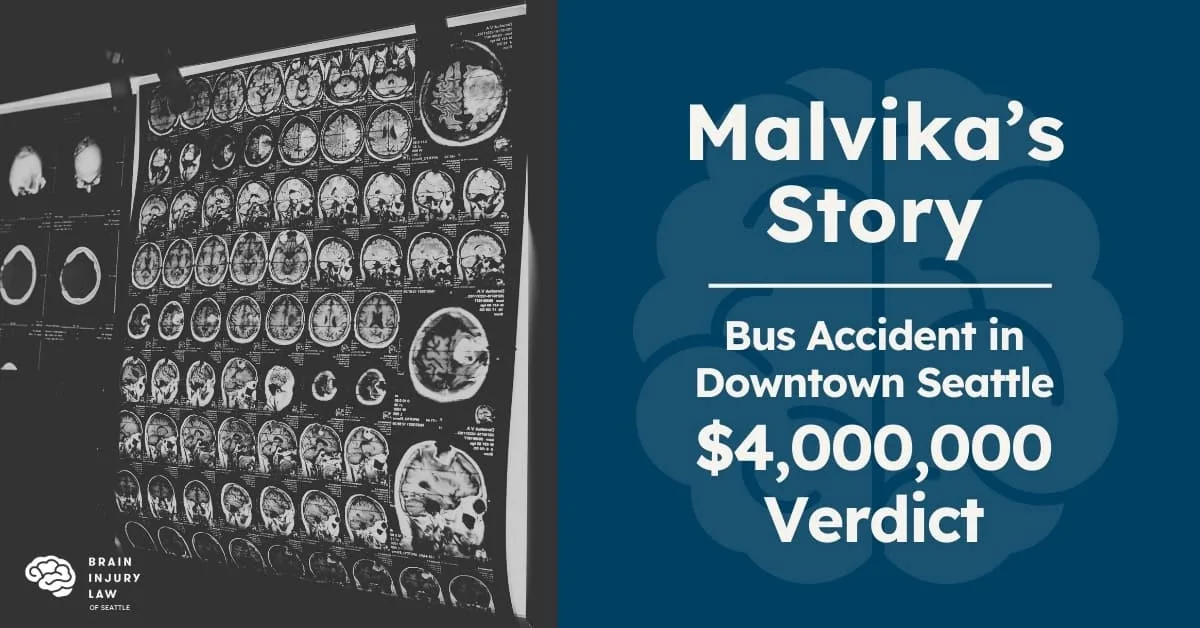
That conclusion is not what the science says. The National Institute of Neurological Disorders and Stroke reports that even with advances in imaging resolution, currently available and clinically validated imaging, blood tests, and other measures cannot always detect damage from mild concussive injuries. The institute also notes that MRI is more sensitive than CT and can pick up subtle brain changes a CT may miss, and that neuropsychological tests of memory, concentration, information processing, and reaction time are often used alongside imaging after a mild TBI.

A normal image is a normal image. It is not a finding that your brain is uninjured. If you have symptoms and a clean scan, the answer is more evaluation, not less. Our guide to traumatic brain injury symptoms catalogs what these injuries look like and how they are categorized.

What the Signs Mean for a Washington Claim

Recognition matters legally as well as medically. Insurers dispute causation and severity in exactly these cases, and the record built in the first weeks usually decides how that argument goes. Gaps in treatment become arguments. So does a chart that never mentions the symptom you have been living with since the week of the crash.

Washington requires most personal injury actions to be commenced within three years. That period comes from RCW 4.16.080(2), which covers an injury to the person not enumerated later in the statute. That subsection supplies the category, and the statute’s opening line sets the three-year length. Neither says when the period starts running for an injury claim, and the statute’s text does not answer that question. Some claims also follow different timing rules or require additional steps before you can file a lawsuit. Three years is not a date anyone should calculate at the kitchen table.

The practical takeaway is simple. Get evaluated, keep getting evaluated, and ask your questions about a claim while you are still working on getting better rather than after.

Talk With a Washington Brain Injury Lawyer

Brain injury is not one of several things we handle. It is the practice. Our founding attorney has focused on brain injury for 25 years and has tried more than 100 jury trials to verdict over a 42-year career. The firm works with neurologists, rehabilitation specialists, and cognitive therapists to show what an image alone cannot.

If you or someone you love is showing these signs after an accident anywhere in Washington, contact Brain Injury Law of Seattle to schedule a free consultation. You will not pay any attorney fees until we recover for you, we can meet you at home or another convenient place if travel is difficult; se habla español.
Signs You May Have a Brain Injury After an Accident
A person can look completely fine and still have an injured brain. Federal researchers report that currently available imaging and blood tests cannot always detect damage from a mild concussive injury.

The signs of a brain injury after an accident include headaches, dizziness, sensitivity to light or noise, memory and concentration trouble, irritability or sadness that seems out of proportion, and sleep that has stopped working. Some appear within minutes. Others take days. And often the person who spots them first is not the injured person at all. It is the spouse, parent, or adult child who knows what this person used to be like. Our Seattle personal injury attorneys represent both readers, because in Washington brain injury cases they often walk in together.

Why a Brain Injury Can Hide in Plain Sight

A person can walk away from a collision, answer every question the paramedic asks, and still have an injured brain. The Centers for Disease Control and Prevention reports that some mild traumatic brain injury and concussion symptoms may appear right away, while others may not appear for hours or days after the injury. That lag is one reason these injuries get missed.

A second reason is harder to say out loud. The CDC also notes that a person may not recognize or admit that they are having problems. The agency adds that the injured person, family members, or a healthcare provider can overlook those problems. An injured brain is not always a reliable narrator of its condition.

So the question is not only what you feel. It is also what the people around you are seeing.

Symptoms That Affect How You Feel, Think, Act, or Sleep

Federal health guidance groups concussion symptoms into four areas, and the pattern across them tells you more than any single item. Watch for the following:

  • Physical: Headaches, dizziness or balance problems, nausea or vomiting early on, vision problems, being bothered by light or noise, and feeling tired with no energy
  • Thinking and remembering: Attention or concentration problems, feeling slowed down, feeling foggy or groggy, short-term or long-term memory problems, and trouble thinking clearly
  • Social or emotional: Anxiety or nervousness, irritability or being easily angered, feeling more emotional than usual, and sadness
  • Sleep: Sleeping more than usual, sleeping less than usual, or trouble falling asleep

Symptoms can also change as recovery goes on. The CDC’s example is headaches and nausea earlier on, while feeling more emotional than usual or having trouble sleeping may not surface until a week or two later. The CDC notes that symptoms generally improve over time and that most people with a mild TBI or concussion feel better within a couple of weeks, but a symptom that arrives late is not automatically unrelated to the crash.

Danger Signs That Mean Call 911

A few symptoms are not a reason to schedule an appointment. They are a reason to get to an emergency department immediately. In rare cases, a dangerous blood clot can crowd the brain against the skull, and the CDC directs people checking on an injured adult to call 911 or go to an emergency department right away for any of these:

  • A headache that gets worse and does not go away
  • Weakness, numbness, decreased coordination, convulsions, or seizures
  • Repeated vomiting
  • Slurred speech or unusual behavior
  • One pupil larger than the other
  • Confusion, restlessness, or agitation, or an inability to recognize people or places
  • Loss of consciousness, looking very drowsy, or being impossible to wake

For a child, every adult danger sign applies, and the CDC adds a child who will not stop crying and cannot be consoled, or who will not nurse or eat. None of these signs should wait until morning.

What to Do When You Are the One Noticing the Change

Many families reach us because a spouse, parent, or adult child noticed something first. The injured person insisted they were fine. The person watching them knew better.

If that is you, what you observe has real value, medically and later in a claim. Write down what you see on the day you see it:

  • The date and time of each symptom, in plain language rather than medical terms
  • Tasks that used to be routine and now take longer, get abandoned, or go wrong
  • Changes in temper, patience, or mood, including who was there when they happened
  • Sleep patterns: when the person falls asleep, how often they wake, and how long they stay down
  • Missed work, missed school, canceled plans, and any help the person needed to get through the day

Bring those notes to every medical appointment. A treating provider can only evaluate what gets reported, and a record kept by someone who lives with the injured person often captures what a short office visit cannot.

A Normal Scan Does Not Rule Out a Brain Injury

This is where many people give up on themselves. The emergency department runs a CT, the scan comes back clean, and the reader concludes that nothing is wrong.

That conclusion is not what the science says. The National Institute of Neurological Disorders and Stroke reports that even with advances in imaging resolution, currently available and clinically validated imaging, blood tests, and other measures cannot always detect damage from mild concussive injuries. The institute also notes that MRI is more sensitive than CT and can pick up subtle brain changes a CT may miss, and that neuropsychological tests of memory, concentration, information processing, and reaction time are often used alongside imaging after a mild TBI.

A normal image is a normal image. It is not a finding that your brain is uninjured. If you have symptoms and a clean scan, the answer is more evaluation, not less. Our guide to traumatic brain injury symptoms catalogs what these injuries look like and how they are categorized.

What the Signs Mean for a Washington Claim

Recognition matters legally as well as medically. Insurers dispute causation and severity in exactly these cases, and the record built in the first weeks usually decides how that argument goes. Gaps in treatment become arguments. So does a chart that never mentions the symptom you have been living with since the week of the crash.

Washington requires most personal injury actions to be commenced within three years. That period comes from RCW 4.16.080(2), which covers an injury to the person not enumerated later in the statute. That subsection supplies the category, and the statute’s opening line sets the three-year length. Neither says when the period starts running for an injury claim, and the statute’s text does not answer that question. Some claims also follow different timing rules or require additional steps before you can file a lawsuit. Three years is not a date anyone should calculate at the kitchen table.

The practical takeaway is simple. Get evaluated, keep getting evaluated, and ask your questions about a claim while you are still working on getting better rather than after.

Talk With a Washington Brain Injury Lawyer

Brain injury is not one of several things we handle. It is the practice. Our founding attorney has focused on brain injury for 25 years and has tried more than 100 jury trials to verdict over a 42-year career. The firm works with neurologists, rehabilitation specialists, and cognitive therapists to show what an image alone cannot.

If you or someone you love is showing these signs after an accident anywhere in Washington, contact Brain Injury Law of Seattle to schedule a free consultation. You will not pay any attorney fees until we recover for you, we can meet you at home or another convenient place if travel is difficult; se habla español.
Client Stories & Verdicts

Contact Brain Injury Law

Call or email us for a free consultation, and find out how we can help you get your life back following a brain injury. We are here to help, answer questions, and educate you about what you have to look forward to. We have the medical and legal knowledge to tell you what you are facing and how you can be helped. We pledge to always tell you like it is so you can make informed decisions about your brain injury and how best to help yourself. This is what we do.

Website developed in accordance with Web Content Accessibility Guidelines 2.2.
If you encounter any issues while using this site, please contact us: 425.307.6001