Phoenix was taken to the ER and diagnosed with a brain injury, a broken clavicle and several other orthopedic problems. After the collision, his physical condition slowly improved, as did his brain injury, but neither fully resolved. He continued to have memory and concentration issues, as well as cognitive fatigue issues for the 14 months following the crash.
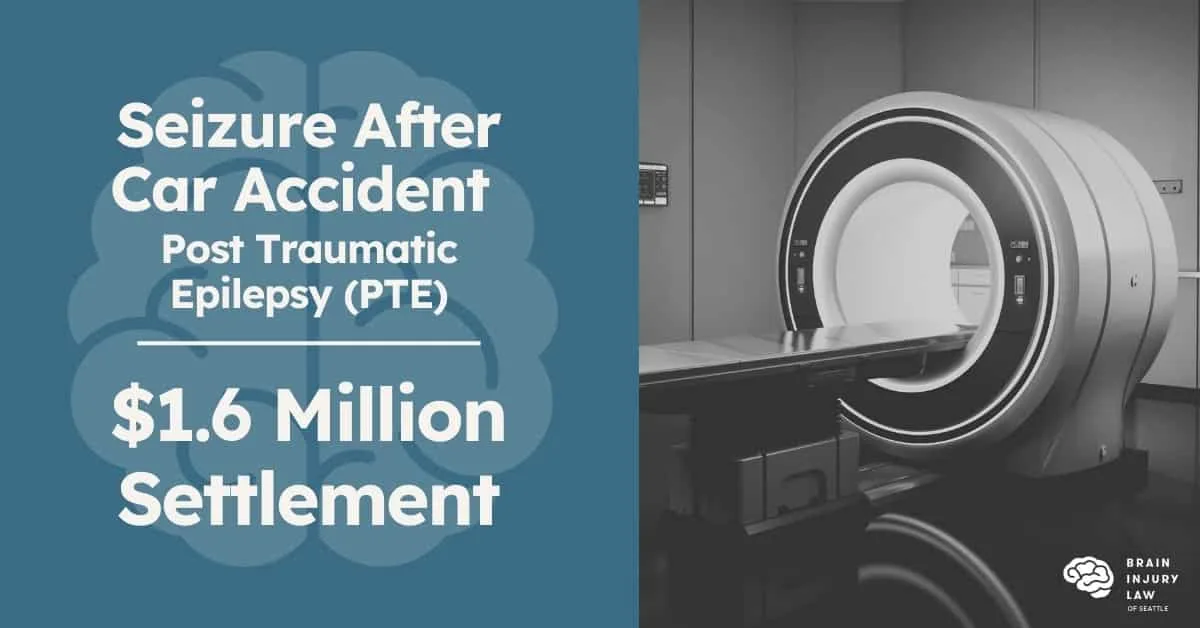
Then, in the 15th month following the head injury, Phoenix had a full seizure while sleeping. He went to the hospital, and he was referred to a neurologist, who told him his seizure may be related to his prior head injury since there was no family history of epilepsy in his family, and there were no other known causes. She referred him to an epilepsy specialist with Swedish hospital. By then, he had another seizure, and the epilepsy specialist formally diagnosed him with post traumatic epilepsy (PTE). He was placed on anti-seizure medication, and told he needed to take it for the rest of his life.
The case was filed, and the City ultimately admitted liability for the crash, but denied that he had PTE or even a brain injury. It had Phoenix examined by a neurologist and an orthopedist who are “hired guns” for the defense. They conceded that Phoenix had a brain injury, but that it should have resolved after only two weeks, while all his orthopedic problems from being hit at 80 mph should have resolved in 6 weeks. Following this, the city proposed mediation. Phoenix and his prior attorney agreed, hoping that the City would do the right thing. It didn’t. It made a top offer of $110,000, claiming that there was not brain injury, and the epilepsy would have occurred without the crash. Phoenix and his attorney walked out, and they then asked BILS to help them prosecute his case.
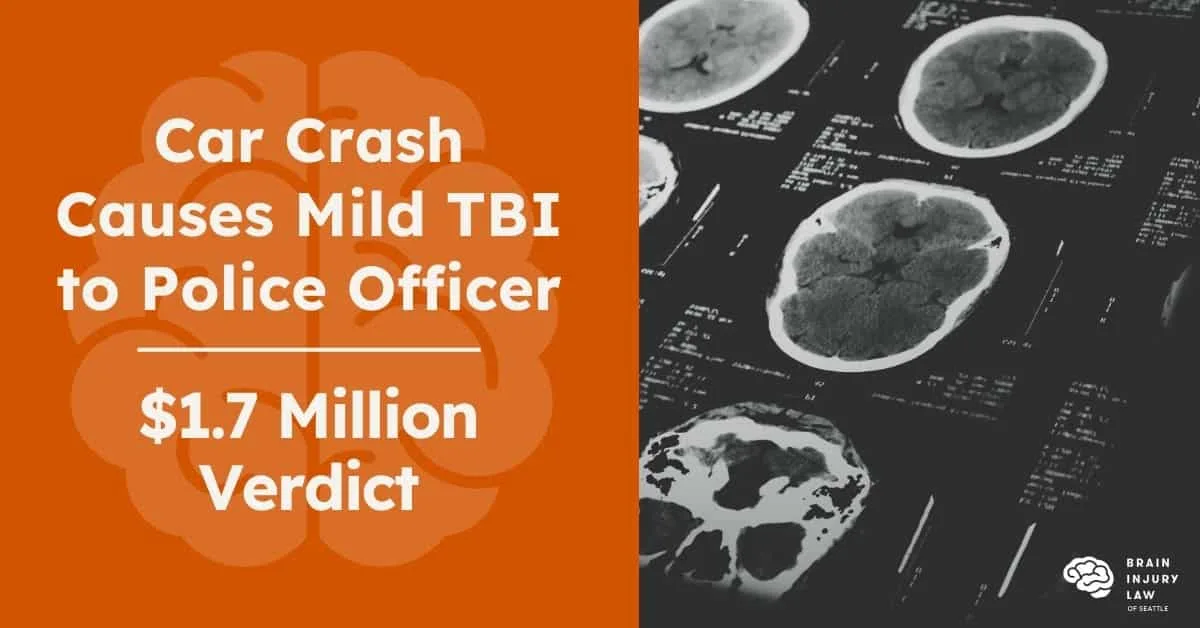
BILS then obtained advanced imaging which revealed a series of what are known as “white matter intensities” in the left front part of his brain-right where his head went through the window. It also revealed a pattern of low blood flow consistent with what is known as a coup-contre-coup type injury, proving that his head was hit on the left, causing a shock wave within the brain that slammed the right side of his brain against the cranium, resulting in damage on both sides of the brain. Of importance, we were able to show that the areas of the brain that were damaged were the same areas that epilepsy has been shown to originate from. The medical literature is very strong that trauma causes a metabolic process within the brain that tries to seal off the damaged areas, preventing the damage from spreading and causing other brain cells to start over firing, causing seizures. Usually, the brain is able to prevent such overfiring, but in same cases it takes up to 2-5 years for the seizures to occur when the residual underlying metabolic neurochemicals from trauma cause the brain to overfire and cause seizures.
This imaging was given to the city, and it again denied that he had epilepsy. The city looked at his medical records and learned that in addition to anti-seizure medication, Phoenix used marijuana to help with the pain and seizure activity. This was approved by his doctor. The city then blamed his cognitive problems on using marijuana, and suggested that the marijuana was what caused many of his findings on the enhanced MRI.
The City then asked to mediate again, and the parties agreed. However, the city only went up to $780,000 at this point, and once again Phoenix walked out, knowing the value of his case was higher than that.
These theories were shot down when the neuroradiologist who did the advance imaging testified that he had done studies on this vary thing, and that Marijuana has no such effects on the brain as seen on MRI. Secondly, BILS had Phoenix stop using marijuana for 8 weeks, and then had a neuropsychological test done, followed by a drug test showing his system was free of marijuana. His neuropsychological testing showed he still had cognitive issues attributable to his brain injury, thereby knocking out the marijuana defense.
The City’s last-ditch effort at a defense was to retain an epileptologist and neuroradiologist to try and rebut the testimony of plaintiff’s neuroradiologist. The City’s epileptologist basically agreed he had a brain injury, agreed he had epilepsy, and agreed that a brain injury can cause epilepsy, but that in this case, being hit at 80 mph and having one’s head blown through a window is not enough to cause epilepsy, even though everything else matched up. Instead, she said she did not know what caused his epilepsy. BILS was able to depose the epileptologist and show that her opinions were pure speculation.
Right before trials, and before BILS would have had portions of her testimony excluded, the City finally agreed to accept Phoenix’s final settlement demand of $1,600,000 to settle his case, over twice the City’s prior highest offer.