What a Traumatic Brain Injury (TBI) Is
To put it simply, a TBI is trauma or damage to your brain. This can be caused in literally dozens of ways, which means each TBI is somewhat unique.
The same two people can be hit in the head in almost the exact same way and yet have profoundly different injuries to their brains.
TBIs fall into 2 major categories: primary injury and secondary injury.
What Is a Concussion, and How Is It Measured?
A concussion is a TBI caused by a blow to the head that causes your brain to shift inside your skull. In some cases, your brain will smack into your skull. In others, your brain accelerates or twists rapidly within your skull.
Concussions might seem to mean very little in movies, books, and TV shows-characters seem to simply shake them off and move on-but they’re serious traumatic brain injuries that can change your life.
Concussions were once graded in terms of severity using the Glasgow Coma Scale:
- Mild
- Moderate
- Severe
However, this system was developed in the 1970s, and our understanding of the brain has changed exponentially since then. We now use a far more sophisticated system consisting of 4 “pillars”: CBI-M.
If any of this applies to you, contact us today to set up a free consultation. We’ll discuss your injury, your circumstances, and how we can help.
Defining Different Types of Concussions with CBI-M (Clinical, Biomarker, Imaging, Modifiers)
CBI-M is rapidly becoming the new gold standard for ranking the severity of a concussion. The framework makes it much easier for healthcare providers to prove the extent of their patients’ injuries (and get them the treatment and compensation they deserve).
1. Clinical
The 1st pillar is heavily based on the Glasgow Coma Scale, using some of the same factors:
- Whether you became unconscious or not when you were injured
- Your pupils’ sensitivity to light and other stimuli
- Whether you have memory gaps (amnesia) or not
The new CBI-M scale uses GCS as the 1st pillar and builds on it with the 3 additional pillars
2. Biomarkers
The 2nd pillar of CBI-M measures biomarkers in your blood. When your brain is injured, two proteins flood your bloodstream: GFAP and UCH-L1.
If a blood test taken within 24 hours of your injury shows high levels of either protein, this may indicate a severe injury that requires imaging.
3. Imaging
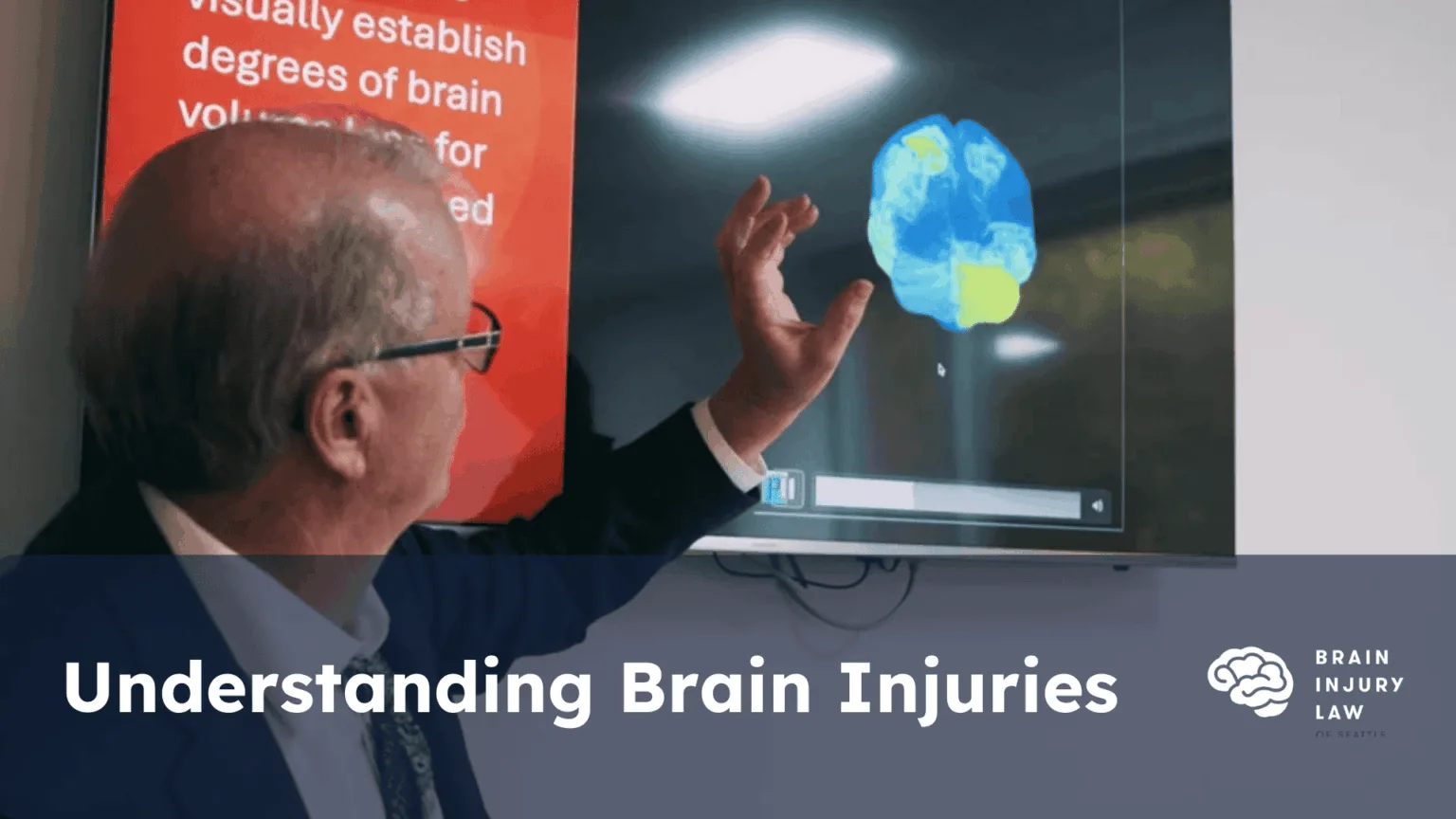
After the blood test, your provider might order an MRI or a CT scan. They might also order more in-depth scans, like Diffusion Tensor Imaging (DTI) or Qualitative Electroencephalography (qEEG).
These scans can show specific types of damage that normal scans can’t pick up.
4. Modifiers
The 4th pillar considers outside factors that could either be causing your TBI symptoms or making them worse:
- How you were injured
- Other medical conditions
- Your medications
- Your home environment
This new method gives us a far more detailed diagnosis and proves (both in hospitals and in courtrooms) the extent of your injury and the treatment you need.
This is far more important than you might think for one simple reason-there are many, many different types of traumatic brain injuries, and they all require unique treatment.
Here are a few other types of primary brain injuries.
Other Types of Primary Brain Injuries
Unfortunately, no matter what type of primary brain injury you have, it’s common for more brain injuries to show up later.
These are called secondary brain injuries, and they can appear anywhere from a few hours after the accident to several months later.
If any of this applies to you, contact us today to set up a free consultation. We’ll discuss your injury, your circumstances, and how we can help.
Diffuse Axonal Injury (DAI)
When your connective nerve fibers in your brain (called axons) are torn because your brain shifted rapidly inside your skull, we call it a diffuse axonal injury. It’s estimated that 25% of patients with DAI will pass away from the injury. In many cases, patients with DAI are in a coma, and if they come out of that coma, they usually have a long road to recovery ahead.
Cerebral Lacerations
When your brain tissue is torn by the trauma to your head, you get a cerebral laceration. These lacerations are often caused by a penetrating TBI, but it’s possible for your skull itself (if it’s been fractured) to lacerate your brain.
Epidural Hematomas (Blood Clots)
Your brain has multiple layers of protection between it and the outside world, including the dura mater. This tough membrane has evolved to keep your brain safe, but when a blood clot forms between your skull and the dura mater, it can be deadly.
This clot is called an epidural hematoma and is usually caused by a head injury, like from a car accident or sports injury. In fact, skull fractures are found in 75% of these cases.
However, there are many non-traumatic possible causes of epidural hematomas-here are a few:
- An infection or abscess
- Coagulopathy (a disease that causes your blood to clot abnormally)
- Tumors that cause bleeding (hemorrhagic)
- Tangles of blood vessels, arteries, and/or veins (vascular malformations)
Traumatic Brain Injury (TBI) Symptoms

There are so many potential signs of a traumatic brain injury (TBI) that it’s next to impossible to list them all without overwhelming you. In this list, you’ll find only the most common signs of a traumatic brain injury.
Physical TBI Symptoms
Some traumatic brain injuries can affect how your other organs function. For example, an injury to your pituitary gland (which sits at the base of the brain) can cause hormonal issues-we regularly see clients with pituitary gland injury symptoms.
Here are some common physical symptoms of a TBI:
- Headaches or migraines
- Dizziness or balance issues
- Unexplained fatigue
- Difficulty falling asleep or staying asleep (especially if you slept well previously)
- Nausea and/or vomiting (especially soon after your injury)
If any of this applies to you, contact us today to set up a free consultation. We’ll discuss your injury, your circumstances, and how we can help.
Thinking or Cognitive Issues
- Feeling confused or struggling to concentrate or think clearly
- Having a reduced attention span
- Feeling slow, foggy, or groggy
- Partial or total memory loss (short-term or long-term)
Issues with Your Ability to Move
- Having issues with coordination or spatial awareness (proprioception). For example, suddenly becoming clumsy, running into objects in your home, or reaching too far for an object you’re trying to pick up and knocking it over.
- Partial or full paralysis or weakness (of any part of your body)
Problems with Your 5 Senses (And Your Awareness of Your Body Parts)
- Feeling sensitive to light
- Double, weakening, cloudy, or blurry vision
- Changes in your hearing, taste, smell, or touch
- Losing sensation in any body part (or on just one half of your body, like your right or left side)
If any of this applies to you, contact us today to set up a free consultation. We’ll discuss your injury, your circumstances, and how we can help.
Trouble Talking, Understanding, or Completing “Basic” Tasks
- Trouble talking or understanding what people are saying (aphasia)
- Struggling to recall and use a word they “should” know well (anomia)
- Trouble with reading (alexia, sometimes called “acquired dyslexia”)
- Struggling to write (agraphia)
Problems with Everyday Life
- Trouble with common everyday activities, like getting dressed, taking a shower or bath, cooking, or cleaning
- Struggling to drive or operate technology (your cell phone, your computer, or equipment at work that you’re very familiar with)
Struggles Relating to People Socially
- Struggling to talk to people or make yourself understood
- Missing social/physical cues or struggling to respond to them appropriately
Mental Health Issues
- Anxiety or panic attacks (especially if you don’t have a history of either one)
- Irritability or outright aggression
- Feeling “thin-skinned” and having mood swings that result in being easily frustrated or overly emotional for no clear reason
- Sadness or depression (especially if you don’t have a history of depression)
- Loss of motivation
If any of this applies to you, contact us today to set up a free consultation. We’ll discuss your injury, your circumstances, and how we can help.
How to Hold the Party Causing the Brain Injury Responsible with Our Brain Injury Lawyers on Your Side
It’s likely you were injured at work, in a public place, at someone’s apartment or home, or due to the negligence or ill intent of another person, business, or corporation. In these cases, you’re likely entitled to compensation.
However, when insurance companies and wealthy corporations get involved, they bring the entire might of their legal team with them. You can certainly sue for a brain injury, but you’re going up against professionals who know what they’re doing and specialize in keeping payouts as low as possible.
When you hire Brain Injury Law of Seattle, you’re not just hiring yet another ambulance chaser who will take on any injury case they can find-you’re hiring a specialized team, attorneys who have won awards for their work, attorneys who win. Attorneys whom the other side has heard of. Attorneys the other side really doesn’t want to go up against.
Our reputation alone is often enough to push for fair compensation for our clients.
We don’t say this to brag but to help you understand that you’re hiring the best, a team that is going to put you and your case first, that is going to do everything possible to make sure this accident doesn’t ruin your life any more than it already has.
Here’s what we’ll fight for:
- Medical costs (both present and expected)
- Lost wages
- Pain and suffering
- Rehabilitation costs
- Loss of consortium
- Loss of enjoyment of life
- Costs of future care
- Loss of earning capacity
We’ve seen insurance companies offer our clients settlements in the low 4 figures before they hired us. When we got involved, their tune We’ve seen insurance companies offer our clients settlements in the low 4 figures before they hired us. When we got involved and helped the injured person get the help they need and showed the full extent of their damage to the insurance carrier, their tune changed, and 7-figure offers would often result.