If a tired truck driver hit you, hours logs can show how long the driver had been on duty. Trucking companies generally only have to keep those logs for six months, so request them early.

Proving a Tired Driver Caused Your Crash, Then Proving Your Injury

Brain Injury Law of Seattle represents people hurt by drowsy and fatigued drivers in Seattle, King County, and communities throughout Washington. These cases depend on a question crash investigators cannot always answer at the scene: how long the driver had been awake or on duty. Our Seattle car accident lawyers examine duty-status records, schedules, and crash evidence for signs that fatigue contributed to the collision. We also work to document brain injuries, including symptoms that may not appear on a standard scan.

Why Clients Trust Brain Injury Law of Seattle

When a fatigued driver causes a serious crash, your case may turn on two kinds of evidence: what the driver did before the collision and how the injury has affected your life since. Brain Injury Law of Seattle investigates both, with particular attention to brain injuries that are easy to overlook.

  • Brain injury is our focus: We focus on traumatic brain injury and other catastrophic injury cases.
  • Decades of brain injury work and trial experience: Founding attorney Scott Blair has helped people with brain injuries for 25 years and has tried more than 100 jury trials to verdict over his legal career.
  • A closer look at brain injuries: When appropriate, we work with specialists to evaluate advanced neuroimaging alongside symptoms and other medical evidence. A normal standard scan does not necessarily rule out a brain injury.
  • Medical expertise when it matters: We work with neurologists, rehabilitation specialists, sleep doctors, endocrinologists, and cognitive therapists when a case calls for their expertise.
  • Meetings that work for you: If you cannot travel to us, we can meet you at home or another convenient location. Se habla español.
  • No attorneys’ fees unless we recover: Case evaluations are free, and you pay no attorneys’ fees unless we recover compensation for you.
  • Prepared for trial: We prepare every case for trial so we are ready to present the evidence and negotiate from a position of strength.

You do not need to sort through driver records and medical questions alone. If a collision left you or someone you love with a possible brain injury, contact Brain Injury Law of Seattle for a free case evaluation. We can discuss the evidence to preserve and your next steps.

Where the Proof of Driver Fatigue Comes From

The National Highway Traffic Safety Administration (NHTSA) explains that crash investigators look for clues that drowsiness played a role, but those clues are not always identifiable or conclusive. NHTSA reports 644 deaths in drowsy-driving-related crashes in 2024. It also notes broad expert agreement that its drowsy-driving crash estimates understate the problem.

NHTSA says these crashes happen most often between midnight and 6 a.m. or in the late afternoon, frequently on rural roads and highways, and often involve a lone driver running off the road at high speed with no sign of braking. We build on that pattern with evidence like this:

  • The crash scene: Photographs and measurements showing whether the driver braked or steered.
  • Work schedules and timecards: Records showing a double shift or an overnight shift before the drive.
  • Phone, receipt, and travel records: Timestamps showing when the driver was active before the crash.
  • Witness accounts: Drivers who saw the vehicle drift between lanes.
  • Hours logs for commercial drivers: The federal records explained below.

Together, these records show what the driver did before the crash. They can help show whether fatigue contributed, even when no single clue proves the driver was drowsy.

Federal Hours Rules for Tired Truck Drivers

Federal motor carrier safety rules apply to commercial trucks and buses that carry property or passengers in interstate commerce, with some exceptions. Washington applies most of these same rules to trucking companies that operate only within the state, with a few exceptions, such as for some log trucks and dump trucks (WAC 446-65-010).

One federal safety rule bars a commercial driver from getting behind the wheel while fatigue has made driving unsafe, and it also bars the trucking company from requiring or permitting that driver to drive.

For property-carrying trucks, the hours-of-service rules, which are federal limits on how long a driver may drive and stay on duty before resting, work like this:

  • Rest first: 10 consecutive hours off duty before driving.
  • A 14-hour window: no driving after 14 consecutive hours from coming on duty.
  • An 11-hour driving cap: no more than 11 hours behind the wheel inside that window.
  • A 30-minute break: no more than eight hours of driving without a 30-minute interruption.
  • A weekly ceiling: no driving after 60 hours on duty in seven days, or 70 hours in eight days for a carrier that runs every day.

The rules include exceptions, such as short-haul and adverse driving condition provisions, so we check which rules applied. In a Washington injury case, a jury may consider a violation of these safety rules as evidence of negligence (RCW 5.40.050). The rules also apply to the trucking company, which may not require or allow a driver to break them.

An important record is the driver’s record of duty status, the logbook of driving and on-duty hours that federal rules generally require carriers to keep on an electronic logging device. Federal rules bar false duty-status reports, and they only require the carrier to keep these records for six months, so our Seattle truck accident lawyers move to preserve them early.

The Brain Injury Behind a Drowsy-Driving Crash

NHTSA explains that a seriously sleep-deprived driver can have micro sleeps, brief losses of consciousness that can last four or five seconds. At 55 miles per hour, that is more than 100 yards traveled while asleep. The CDC lists motor vehicle crashes among the common causes of traumatic brain injury, an injury from a bump, blow, or jolt to the head that affects how the brain works. The CDC adds that a concussion can also come from a hit to the body that makes the head move quickly back and forth, even if your head never strikes anything.

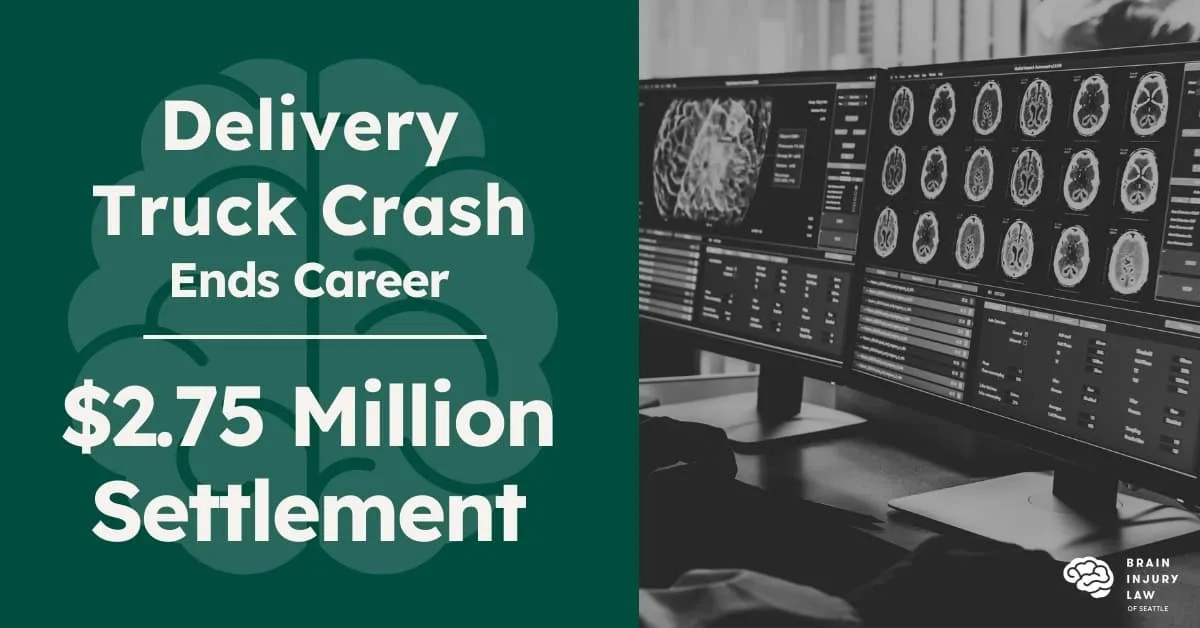
The CDC says a brain scan such as a CT is not needed to spot a mild brain injury or concussion, and doctors may use one for patients at risk of bleeding on the brain. If the hospital said your scans looked fine, but you have trouble remembering things, concentrating, or sleeping, those symptoms can still be signs of a mild brain injury. Our guide to brain injury symptoms explains what to watch for, and our Seattle catastrophic injury lawyers build the medical proof of the injury. When a spouse or adult child manages the appointments and paperwork, we work with them directly.

Schedule a Free Consultation With a Seattle Fatigued Driving Accident Lawyer

If a drowsy or fatigued driver hurt you or someone you love, you do not need to prove the driver was tired before you call. Contact us for a free case evaluation. You pay no attorneys’ fees until we recover for you, we can meet you at home when travel is hard, and se habla español.

Frequently Asked Questions

How do you prove the other driver was too tired to drive?

We rebuild the driver’s hours before the crash from work schedules, timecards, phone and receipt timestamps, witnesses, and the crash scene. For most commercial truck drivers, required hours logs add a written record.

How long do I have to file a lawsuit after a drowsy-driving crash in Washington?

Washington generally requires a personal injury lawsuit to be filed within three years under RCW 4.16.080(2). Other rules can affect that window, so confirm your deadline with a lawyer. If a city, county, transit agency, or state driver caused the crash, you generally must file a written claim with the government and wait 60 days before you can sue (RCW 4.96.020 and RCW 4.92.110). Trucking companies generally only have to keep hours logs for six months.

What if the insurer says I was partly at fault?

Washington follows comparative fault, which means your share of the blame reduces your award proportionately. Under RCW 4.22.005, that share does not bar recovery, apart from a few narrow statutory exceptions. We gather the evidence that answers a blame-shifting argument.

Fatigued Driving Accidents
If a tired truck driver hit you, hours logs can show how long the driver had been on duty. Trucking companies generally only have to keep those logs for six months, so request them early.

Proving a Tired Driver Caused Your Crash, Then Proving Your Injury

Brain Injury Law of Seattle represents people hurt by drowsy and fatigued drivers in Seattle, King County, and communities throughout Washington. These cases depend on a question crash investigators cannot always answer at the scene: how long the driver had been awake or on duty. Our Seattle car accident lawyers examine duty-status records, schedules, and crash evidence for signs that fatigue contributed to the collision. We also work to document brain injuries, including symptoms that may not appear on a standard scan.

Why Clients Trust Brain Injury Law of Seattle

When a fatigued driver causes a serious crash, your case may turn on two kinds of evidence: what the driver did before the collision and how the injury has affected your life since. Brain Injury Law of Seattle investigates both, with particular attention to brain injuries that are easy to overlook.

  • Brain injury is our focus: We focus on traumatic brain injury and other catastrophic injury cases.
  • Decades of brain injury work and trial experience: Founding attorney Scott Blair has helped people with brain injuries for 25 years and has tried more than 100 jury trials to verdict over his legal career.
  • A closer look at brain injuries: When appropriate, we work with specialists to evaluate advanced neuroimaging alongside symptoms and other medical evidence. A normal standard scan does not necessarily rule out a brain injury.
  • Medical expertise when it matters: We work with neurologists, rehabilitation specialists, sleep doctors, endocrinologists, and cognitive therapists when a case calls for their expertise.
  • Meetings that work for you: If you cannot travel to us, we can meet you at home or another convenient location. Se habla español.
  • No attorneys’ fees unless we recover: Case evaluations are free, and you pay no attorneys’ fees unless we recover compensation for you.
  • Prepared for trial: We prepare every case for trial so we are ready to present the evidence and negotiate from a position of strength.

You do not need to sort through driver records and medical questions alone. If a collision left you or someone you love with a possible brain injury, contact Brain Injury Law of Seattle for a free case evaluation. We can discuss the evidence to preserve and your next steps.

Where the Proof of Driver Fatigue Comes From

The National Highway Traffic Safety Administration (NHTSA) explains that crash investigators look for clues that drowsiness played a role, but those clues are not always identifiable or conclusive. NHTSA reports 644 deaths in drowsy-driving-related crashes in 2024. It also notes broad expert agreement that its drowsy-driving crash estimates understate the problem.

NHTSA says these crashes happen most often between midnight and 6 a.m. or in the late afternoon, frequently on rural roads and highways, and often involve a lone driver running off the road at high speed with no sign of braking. We build on that pattern with evidence like this:

  • The crash scene: Photographs and measurements showing whether the driver braked or steered.
  • Work schedules and timecards: Records showing a double shift or an overnight shift before the drive.
  • Phone, receipt, and travel records: Timestamps showing when the driver was active before the crash.
  • Witness accounts: Drivers who saw the vehicle drift between lanes.
  • Hours logs for commercial drivers: The federal records explained below.

Together, these records show what the driver did before the crash. They can help show whether fatigue contributed, even when no single clue proves the driver was drowsy.

Federal Hours Rules for Tired Truck Drivers

Federal motor carrier safety rules apply to commercial trucks and buses that carry property or passengers in interstate commerce, with some exceptions. Washington applies most of these same rules to trucking companies that operate only within the state, with a few exceptions, such as for some log trucks and dump trucks (WAC 446-65-010).

One federal safety rule bars a commercial driver from getting behind the wheel while fatigue has made driving unsafe, and it also bars the trucking company from requiring or permitting that driver to drive.

For property-carrying trucks, the hours-of-service rules, which are federal limits on how long a driver may drive and stay on duty before resting, work like this:

  • Rest first: 10 consecutive hours off duty before driving.
  • A 14-hour window: no driving after 14 consecutive hours from coming on duty.
  • An 11-hour driving cap: no more than 11 hours behind the wheel inside that window.
  • A 30-minute break: no more than eight hours of driving without a 30-minute interruption.
  • A weekly ceiling: no driving after 60 hours on duty in seven days, or 70 hours in eight days for a carrier that runs every day.

The rules include exceptions, such as short-haul and adverse driving condition provisions, so we check which rules applied. In a Washington injury case, a jury may consider a violation of these safety rules as evidence of negligence (RCW 5.40.050). The rules also apply to the trucking company, which may not require or allow a driver to break them.

An important record is the driver’s record of duty status, the logbook of driving and on-duty hours that federal rules generally require carriers to keep on an electronic logging device. Federal rules bar false duty-status reports, and they only require the carrier to keep these records for six months, so our Seattle truck accident lawyers move to preserve them early.

The Brain Injury Behind a Drowsy-Driving Crash

NHTSA explains that a seriously sleep-deprived driver can have micro sleeps, brief losses of consciousness that can last four or five seconds. At 55 miles per hour, that is more than 100 yards traveled while asleep. The CDC lists motor vehicle crashes among the common causes of traumatic brain injury, an injury from a bump, blow, or jolt to the head that affects how the brain works. The CDC adds that a concussion can also come from a hit to the body that makes the head move quickly back and forth, even if your head never strikes anything.

The CDC says a brain scan such as a CT is not needed to spot a mild brain injury or concussion, and doctors may use one for patients at risk of bleeding on the brain. If the hospital said your scans looked fine, but you have trouble remembering things, concentrating, or sleeping, those symptoms can still be signs of a mild brain injury. Our guide to brain injury symptoms explains what to watch for, and our Seattle catastrophic injury lawyers build the medical proof of the injury. When a spouse or adult child manages the appointments and paperwork, we work with them directly.

Schedule a Free Consultation With a Seattle Fatigued Driving Accident Lawyer

If a drowsy or fatigued driver hurt you or someone you love, you do not need to prove the driver was tired before you call. Contact us for a free case evaluation. You pay no attorneys’ fees until we recover for you, we can meet you at home when travel is hard, and se habla español.

Frequently Asked Questions

How do you prove the other driver was too tired to drive?

We rebuild the driver’s hours before the crash from work schedules, timecards, phone and receipt timestamps, witnesses, and the crash scene. For most commercial truck drivers, required hours logs add a written record.

How long do I have to file a lawsuit after a drowsy-driving crash in Washington?

Washington generally requires a personal injury lawsuit to be filed within three years under RCW 4.16.080(2). Other rules can affect that window, so confirm your deadline with a lawyer. If a city, county, transit agency, or state driver caused the crash, you generally must file a written claim with the government and wait 60 days before you can sue (RCW 4.96.020 and RCW 4.92.110). Trucking companies generally only have to keep hours logs for six months.

What if the insurer says I was partly at fault?

Washington follows comparative fault, which means your share of the blame reduces your award proportionately. Under RCW 4.22.005, that share does not bar recovery, apart from a few narrow statutory exceptions. We gather the evidence that answers a blame-shifting argument.