Traumatic Brain Injury Attorneys · Washington State
Brain Injury Lawyers.
It's Our Focus, Not a Sideline.
Brain injury is what this firm is built around — it's in our name, and it's where our medical knowledge and expert relationships run deepest. We handle other serious injury cases too. But when you call about a TBI, you speak with an attorney who knows the injury.
Prior results do not guarantee or predict a similar outcome in any future case. Every case is different and must be evaluated on its own facts.
Contingency fee: you pay no attorney fee unless we recover for you. Case costs and expenses are separate from the attorney fee and are explained in writing before we begin.
Talk to a Brain Injury Attorney
Free, confidential case review. You pay no attorney fee unless we recover for you.
Submitting this form does not create an attorney-client relationship. Please don't send confidential information until we've agreed to represent you.
The Injury Is Real.
Proving It Is the Job.
A brain injury doesn't show up in a cast or a scar. It shows up when you can't find a word you've used your whole life. When you get lost driving somewhere familiar. When your spouse says you're not the same person.
Insurers know that. It's exactly why they fight these cases — and why a firm that handles TBI occasionally is not the firm you want handling yours.
"Your CT scan came back normal."
A normal CT rules out a bleed. It does not rule out a brain injury. Most traumatic brain injuries are invisible on standard emergency imaging — and the defense will hand the jury that clean scan anyway.
"You were never unconscious."
You do not have to lose consciousness to sustain a traumatic brain injury. The medical literature is clear on this. The adjuster's script is not.
"That's just stress. Or age. Or depression."
Every one of those is a defense theory, and each has to be answered with evidence, not argument. That's the work.
How a Brain Injury Case Is Won
Four Things the Other Side Can't Argue With
You can't win a TBI case by insisting the injury is real. You win it by building a record that makes the injury impossible to dismiss.
The right scan, ordered by the right specialist
Emergency-room imaging is designed to catch what will kill you tonight, not what will change your life for the next thirty years. Advanced imaging and the correct neurological workup can document injury that standard scans miss entirely.
Neuropsychological evaluation
Standardized testing measures memory, processing speed, attention, and executive function against population norms — and includes built-in validity measures that answer the defense's favorite accusation before they can make it.
The people who knew you before
Your manager. Your college roommate. The friend who noticed first. Testimony from people with no financial stake in the outcome is often the most persuasive evidence in the case, and it has to be gathered early, while memories are fresh.
What this injury will actually cost you
Lost earning capacity, future care, vocational impact. A brain injury claim valued only on the medical bills already incurred is a claim that has been undervalued, and once you sign a release, that's the end of it.
How These Injuries Happen
Brain Injury Cases We Handle
The mechanism matters less than what it did to you. If someone else's negligence caused it, we want to hear about it.
Motor Vehicle Crashes
The leading cause of traumatic brain injury we see. Your head does not have to strike anything for your brain to be injured inside your skull.
Falls
Unsafe stairs, unmarked hazards, failed railings. Property owners have a duty, and when they ignore it, a fall becomes a lifelong injury.
Pedestrian & Bicycle Collisions
No structure between you and a vehicle. These cases produce some of the most severe brain injuries we handle.
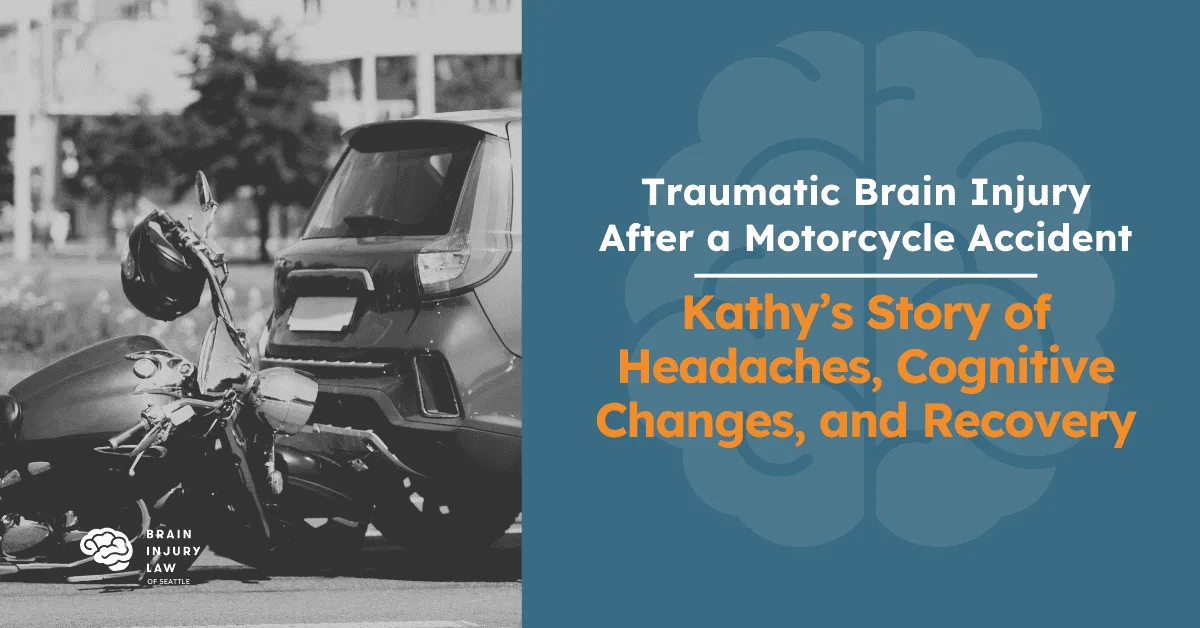
Motorcycle Crashes
A helmet reduces risk. It does not eliminate it. And wearing one does not mean the crash was your fault.
Sports & Recreation
Repeat concussions, mishandled return-to-play, inadequate supervision or equipment — especially where children are involved.
Medical & Anesthesia Errors
Oxygen deprivation during a procedure can cause a catastrophic brain injury in minutes. These cases are complex and we have handled them.
Any of this sound familiar?
- Headaches that won't stop
- Memory loss
- Trouble concentrating
- Light sensitivity
- Dizziness
- Constant fatigue
- Slurred speech
- Loss of coordination
- Nausea
- Blurry vision
- Personality changes
- Seizures
These are the symptoms our clients describe. If they started after an accident, they are not something to wait out — and they are not something you should have to explain to a lawyer who's never handled a brain injury case.
Free Case ReviewWhy Clients Choose Us
Built for Brain Injury Cases
Brain injury is our focus
It's in the firm's name. We take other serious injury cases — but TBI is the one we've built the medical knowledge, the expert relationships, and the case strategy around.
An attorney answers
When you call, you get a lawyer. Not an intake script, not a case manager, not a callback next week.
We coordinate your care
We connect you with neurologists, neuropsychologists, and rehabilitation specialists who understand brain injury. Your recovery is not a side effect of the case.
We come to you
Fatigue, light sensitivity, and trouble driving are symptoms, not excuses. We'll meet you at home, at the hospital, or wherever is manageable.
Washington Brain Injury Claims
Four Rules Worth Knowing
Plain-English version. The details are what we'll walk through on the call.
Generally three years to file
Washington typically allows three years from the date of injury to file a personal injury lawsuit. Claims against a city, county, or state agency carry shorter notice requirements.
Partial fault doesn't bar recovery
Washington applies pure comparative fault. Even if you bear some responsibility, you can still recover — reduced by your share.
Future losses are recoverable
A brain injury claim is not limited to bills already paid. Future medical care, future earning capacity, and the non-economic impact on your life are all part of it.
Deadlines can be shorter for minors and agencies
The rules shift when the injured person is a child or when a public entity is involved. If either is true in your case, don't wait to ask.
Client Reviews
In Their Words
He partners with leading experts in neuroscience and brain injury medicine, bringing in the right specialists to build the strongest possible case. That investment in expertise made a real difference not only in our outcome, but was essential to getting me proper diagnoses and improving my medical treatment.
My family and I felt increasingly fortunate to have Scott and his team leading my recent case to a successful outcome and wouldn’t hesitate in recommending Brain Injury Law of Seattle to anyone in need of specialized counsel.
Scott Blair and his team were passionate and professional throughout this whole experience. They were understanding that it can be a difficult process but made sure I was informed and supported. Scott is very thorough, experienced and personable.
These are excerpts from reviews by actual clients of Brain Injury Law of Seattle, published in full on our website. Testimonials do not describe all of the firm’s results and are not a guarantee or prediction of the outcome of any other case. Every case is different and must be evaluated on its own facts.
Looking for a Brain Injury Lawyer Near You?
Three Offices. One Phone Number.
Call one number and we'll connect you with the office closest to you — or come to you if travel is part of the problem.
Call 425-307-6001Edmonds
437 5th Ave. S., Ste. 103, Edmonds, WA 98020
Snoqualmie
38579 SE River St. #3, Snoqualmie, WA 98065
Yakima
402 E Yakima Ave. #1050, Yakima, WA 98901
Also Serving
- Seattle
- Bellevue
- Everett
- Lynnwood
- Shoreline
- Kirkland
- Redmond
- Renton
- Tacoma
- Issaquah
- North Bend
- Mukilteo
- Monroe
- Kent
- Ellensburg
- Selah
We serve clients throughout the greater Seattle area and across Washington from our offices in Edmonds, Snoqualmie, and Yakima.
Common Questions
Before You Call
Possibly. A normal CT or MRI rules out certain findings; it does not rule out a traumatic brain injury. Many TBIs are not visible on standard emergency imaging. The question is what the right workup shows — and whether anyone has ordered it yet.
We work on a contingency fee: you pay no attorney fee unless we recover for you. Case costs and expenses are separate from the fee, and we explain exactly how they are handled in writing before we begin. The consultation itself is free.
Generally three years from the date of injury. Shorter notice deadlines apply if a government entity is involved, and different rules apply when the injured person is a child. If either fits your situation, call sooner rather than later.
Because a TBI case is a medical case as much as a legal one. It turns on which specialists you see, which testing gets done, when it gets done, and whether the record captures the change in you that the people around you can already see. A firm that handles a brain injury case once every few years is learning on your file.
Anyone who gives you a number before reviewing the medical records is guessing. It depends on the severity of the injury, the effect on your ability to work, the cost of future care, and the insurance available. We'll give you a straight answer once we've actually looked — and no lawyer can promise a result.
Not necessarily. Firms decline brain injury cases for a lot of reasons, and "we didn't see the injury" is one of them. Unless you've signed a release or the deadline has passed, it's worth a second look.