Rapid acceleration and deceleration brain injuries are some of the most common injuries we see our clients for. While they have a wide variety of causes, they’re very common in car wrecks.
These traumatic brain injuries (TBIs) harm your brain in a number of ways. In this article, you’ll learn what rapid acceleration and deceleration do to your brain, what a traumatic axonal injury (TAI) is, and how whiplash fits into the picture.
How Rapid Acceleration and Deceleration Affect Your Brain
Your brain is anchored to your skull, primarily by 3 membranes known as your meninges.
That anchoring allows your brain to move around in your skull quite a bit. In most cases, it’s enough to keep your brain from hitting your skull while you’re moving around normally.
However, it simply didn’t evolve to take the kind of stress that your brain and body experience in a motor vehicle accident.
When your body starts accelerating in a vehicle, not every part of you moves at the same speed. Your organs are not bound tightly together inside you—many are floating a little bit, just like your brain, in a cavity of some sort.
So when you start going fast, it takes them a very small amount of time to catch up with the movement. Basically, they move around inside you, which is what your brain does when you start to accelerate.
Think of a jar of loose pickles. If you throw the jar, where are all the pickles while it’s in the air? Pushed against one side of the jar. Even though there’s liquid in there, they move around in the liquid.
Now, what happens if someone catches that jar? The pickles slam into the opposite side of the jar as their movement suddenly stops.
If you put that jar of pickles in a second, larger jar, and repeat the experiment, the same thing happens twice. When the larger jar is caught, the smaller jar inside slams into the front, and the pickles inside the smaller jar do the same thing.
This is what happens to your body and brain in a car accident. When your vehicle suddenly and rapidly stops, you’re thrown violently—you keep moving, even if you have your seatbelt on.
And even when you stop moving, your brain is still moving—until it hits your skull.
This can get more and more complicated depending on what direction your vehicle was hit from, whether you were wearing a seatbelt, whether you hit your head on something (like a steering wheel), and whether you were thrown from the vehicle.
What Whiplash Is (And Why It’s Not Just About Your Neck)
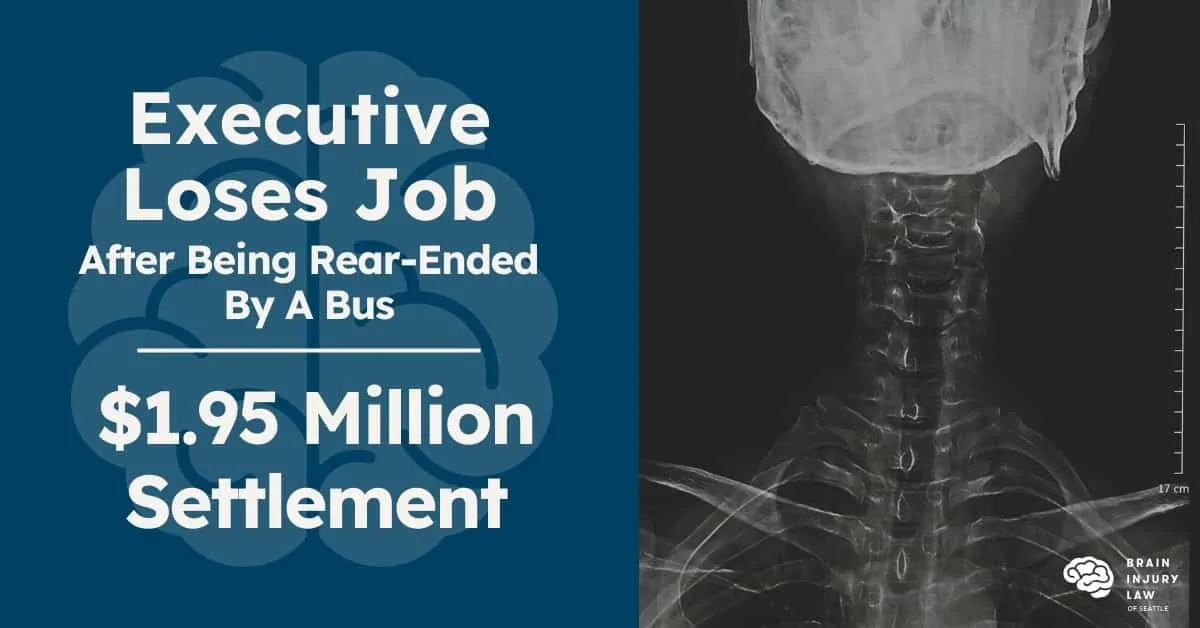
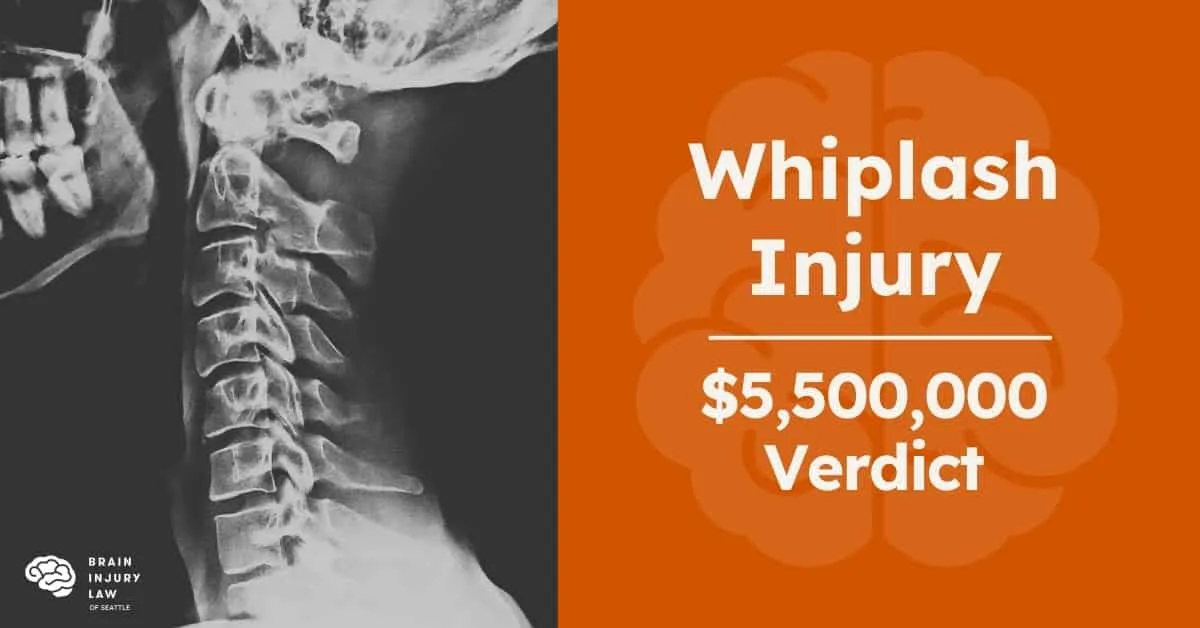
Whiplash is a common injury in a car wreck that we usually think about as damage to your neck. This is when your head whips forward and backward as your vehicle hits or is hit by other vehicles or stationary objects.
As your head whips forward, your brain rapidly moves to the back of your head. If that force is strong enough, your brain smashes into the back of your skull, causing damage—the membranes anchoring it to your skull aren’t enough to keep it stationary.
Most commonly, your head then whips backward (although this can happen in many directions in a car accident). As it whips backward, your brain flies forward in your skull and hits the front of your skull, which is covered in sharp points (where your nasal cavity is).
After each hit, it’s possible that the force is so great that your brain bounces back and forth inside your skull a few times as you come to rest. Even if nothing actually pierces your skull, you can still have a major TBI.
Often, your neck will be in a lot of pain after this type of injury (whiplash is very hard on your neck muscles and spinal cord). Many people focus on this pain, not realizing that their brain was severely damaged at the same time.
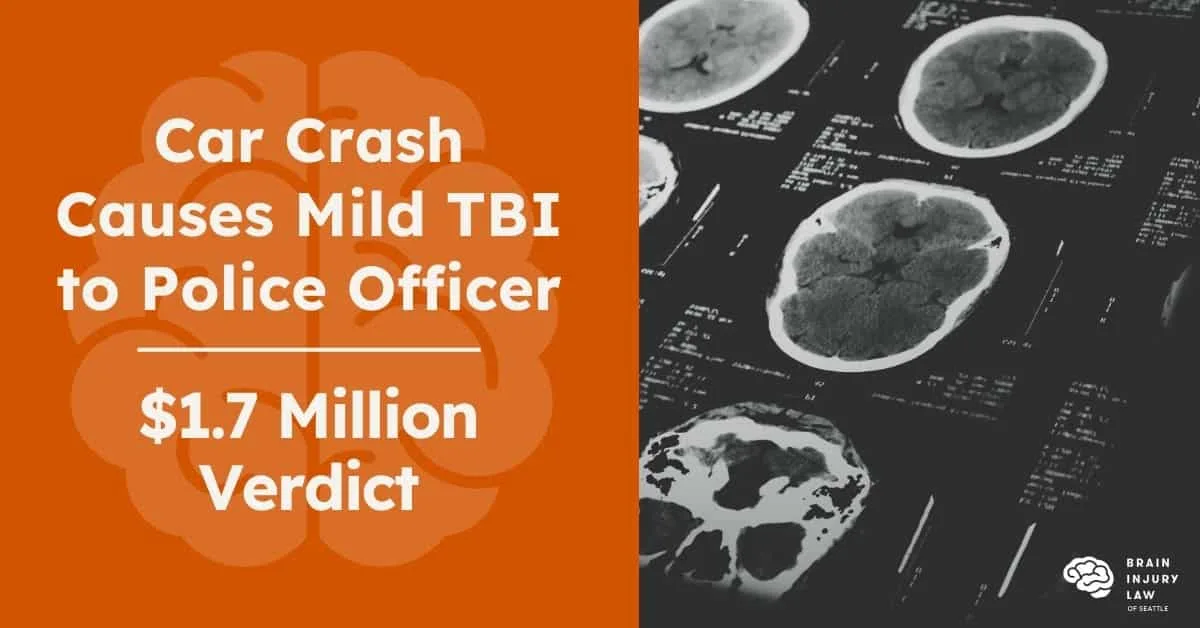
While many MRIs and even CT scans will show these types of injuries, they will often miss something else that’s happening at the same time your brain is hitting your skull—what all that force is doing to the connections between your neurons (brain cells).
These connections are called synapses, and they’re made by long “arms” coming out of each neuron (known as axons).
Diffuse Axonal Injuries from Rapid Acceleration and Deceleration
Rapid acceleration and deceleration brain injuries often include a second type of traumatic brain injury called diffuse axonal injury (DAI).
This is when your axons are sheared apart by the massive forces throwing your brain around in your skull. The synapses break, and your neurons can no longer talk to each other.
These connections between neurons are extremely important—and just as delicate. Your brain has about the consistency of a bowl of JELL-O. It can be hard to believe, but it’s actually very weak in a structural sense.
Even if your whiplash isn’t strong enough to slam your brain into your skull at all, you might still have a DAI. The forces might still have been strong enough to rip axons apart.
When people are in car accidents, they usually don’t get the kind of specialized imaging needed to see a DAI—it won’t show up on a CT or even a regular MRI. You need something like Diffuse Tensor Imaging (DTI) or qualitative electroencephalography (qEEG) Brain Mapping to see a DAI.
This is why it’s crucial to pay close attention to any brain injury symptoms you might be having. An organ this delicate can get damaged even in a relatively “low speed” or “minor” accident (below 50 MPH).
If You’ve had Whiplash in a Car Accident, We’re Here to Help
If you’ve had a head injury of any sort—including whiplash during a car accident—we’re here to help.
Click here to contact us today and schedule a free consultation. We’ll talk about your injury, the symptoms you’re struggling with, and how we can help.