Many people in high-skill, cognitively demanding careers—IT professionals, project managers, analysts, executives, engineers, designers, and other knowledge-based workers—depend on sharp thinking to perform at a high level every day. You may still be showing up to work, but inside, everything feels harder than it should be. Tasks take longer, decisions feel foggy, and details slip. Fatigue is always hanging around.
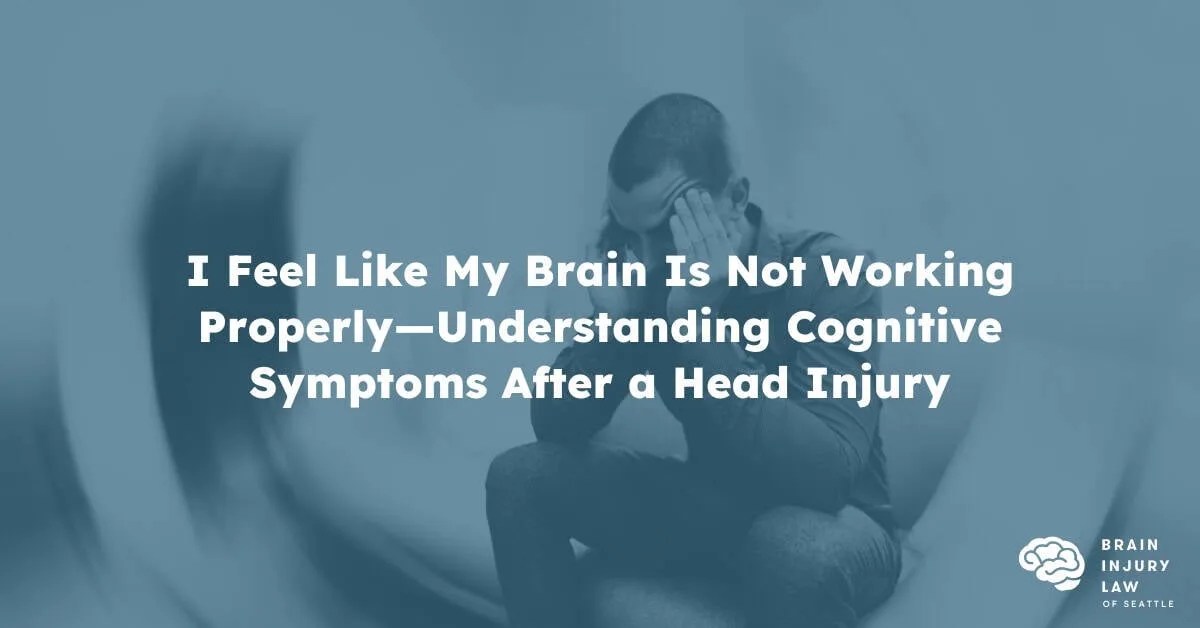
If you find yourself thinking, “I feel like my brain isn’t working properly,” you are not alone, and these symptoms are common after a traumatic brain injury (TBI)—even a mild one.
When you suddenly feel like your brain isn’t working, the fear can be overwhelming. If a head injury is affecting your ability to work and live normally, we’d like to help you to:
- understand what may be happening
- why it happens
- what steps you can take medically and legally
You may be reading this during a difficult moment, and you deserve clarity and practical help.
Why Smart, High-Performing People Struggle After a Head Injury
One of the most distressing realities for white-collar professionals is the sudden onset of brain fog after a concussion. When your career is built on your ability to think clearly and respond quickly, cognitive symptoms can shake you at your core.
What most people don’t realize is that you don’t have to experience a severe blow to the head for traumatic brain injury symptoms to manifest. Research shows that even mild TBIs can disrupt communication between brain regions responsible for focus, memory, executive function, and emotional regulation. According to the Journal of Head Trauma Rehabilitation, these disruptions can make thinking feel slow or uneven even when outward physical symptoms appear mild.
Many people cope quietly for weeks or months, hoping symptoms will fade.
The earlier you understand what is happening, the easier it is to get proper medical and legal support.
The Signs of Cognitive Impairment After a Head Injury
Cognitive changes after a head injury can look different for everyone, but there are some common patterns.
Many people describe a heavy mental fog that makes everyday tasks feel strangely overwhelming.
Others struggle with processing information quickly enough, especially in meetings, during code reviews, or when juggling multiple projects.
You may notice a tendency to lose track of what you were doing or forget details you would normally recall instinctively. Some professionals describe a deep, unfamiliar procrastination—not the normal kind, but the kind that comes from your brain feeling unable to get started at all.
You may feel like your thinking drains your energy in a way it never used to, and that even minor decisions exhaust you, but none of these symptoms are a reflection of your intelligence or work ethic—they are neurological.
Keep in mind that there is a strong connection between brain injury and work performance changes. These symptoms can be signs that your brain is working harder than it should because it is still trying to heal.
How These Brain Changes Can Affect Work for High-Cognition Professionals
For someone whose job relies heavily on mental sharpness—such as analyzing data, managing teams, coding solutions, troubleshooting systems, or making fast strategic decisions—mild TBI symptoms in professionals can feel devastating.
You may worry about performance reviews or fear that coworkers will notice the change. The pressure builds, increasing anxiety, which in turn worsens cognitive symptoms. This is also a common occurance—the National Institutes of Health notes that anxiety and cognitive dysfunction often interact after a concussion in a self-perpetuating cycle.
Many professionals blame themselves, not realizing the issue is physiological—not psychological. You don’t have to go through this alone. Medical—and legal—assistance are available.
I Don’t Feel Like Myself—Signs You May Need Medical Attention
Many people assume that if they didn’t lose consciousness or if they were able to walk away from whatever accident they were involved in, then their brain must be fine. However, the brain is far more sensitive than most people realize.
Even a mild impact has the potential to interfere with normal functioning for days, weeks, or longer. If you’ve experienced a recent accident, fall, or sudden jolt, it’s important to understand that symptoms like these rarely happen without a cause.
A proper medical evaluation can help you understand what’s happening beneath the surface. Neurologists, concussion specialists, and trained clinicians use neurocognitive testing to assess things like:
- Memory
- Focus
- Processing speed
- Executive function
Research consistently shows that early, structured care leads to better long-term outcomes. Treatment may include:
- Vestibular therapy
- Cognitive rehabilitation
- Occupational therapy
- Speech-language therapy
In addition, medication may be used to help with headaches, sleep issues, or anxiety that arise during recovery.
If you truly don’t feel like yourself, it is important to be evaluated. You should not wait until symptoms become overwhelming. A specialist can help you get the answers and support you deserve.
When Your Brain Isn’t Working the Way It Used To—Legal Considerations
The same is true of the financial and legal side of the situation. Reach out for legal guidance early. Protecting your right to treatment, documentation, and long-term compensation is crucial—especially if your cognitive fatigue and other symptoms are affecting your work performance or job stability.
Brain injuries often interfere with your ability to perform essential job duties, meet deadlines, or sustain the mental endurance your career requires. This can result in lost wages, impaired job performance, or long-term impacts on your earnings.
Brain Injury Law of Seattle understands how deeply a TBI can affect both your personal and professional life. Their role is to help you secure the financial and medical support you need—not only for today, but for your long-term recovery and stability.
The first step is acknowledging what you feel and reaching out to people who can help, both for medical treatment and legal assistance.
Contact Brain Injury Law of Seattle. Our team understands the medical, emotional, and financial challenges caused by TBIs and can help protect your rights so you can focus on healing.You don’t have to face this alone. Help is available, and your recovery matters.