If you have a headache and neck injury after a rear-end collision, don’t brush it off as “just soreness.” A post-accident headache is common, but it can come from a neck injury, a concussion, or both.
Knowing the difference matters. The pattern of the headache, the symptoms that come with it, and what you tell the doctor right away can shape both your treatment and your recovery.
Key takeaways
- A headache after a rear-end crash can come from whiplash, a concussion, or both.
- A neck-related headache often starts in the back of the head and moves over the top toward the forehead.
- A concussion headache is more likely to feel like it affects the whole head and gets worse with bright lights, noise, or physical exertion.
- You can suffer a concussion in a rear-end crash even if your head never strikes a hard surface.
- Brief memory gaps after the crash may matter. Even if you can’t recall the first 20 to 30 seconds after the collision, this may be medically important.
- Tell your doctor every symptom, even if it seems minor or unrelated.
- After discharge, reducing screen time, bright light exposure, and noisy environments may help avoid aggravating symptoms.
- Concussion symptoms do not always resolve quickly, so tracking what improves and what does not is important.
What causes a headache after a rear-end collision?
A headache after a rear-end collision is usually caused by a neck injury, a concussion, or a combination of both. The two can feel similar at first, which is why people often underestimate what happened.
In many rear-end crashes, the body is suddenly thrown forward. That rapid acceleration followed by a rapid deceleration can strain the neck and also cause the brain to move sharply forward and backwards inside the skull. Both mechanisms can trigger significant headache pain.
How does a whiplash headache usually feel?
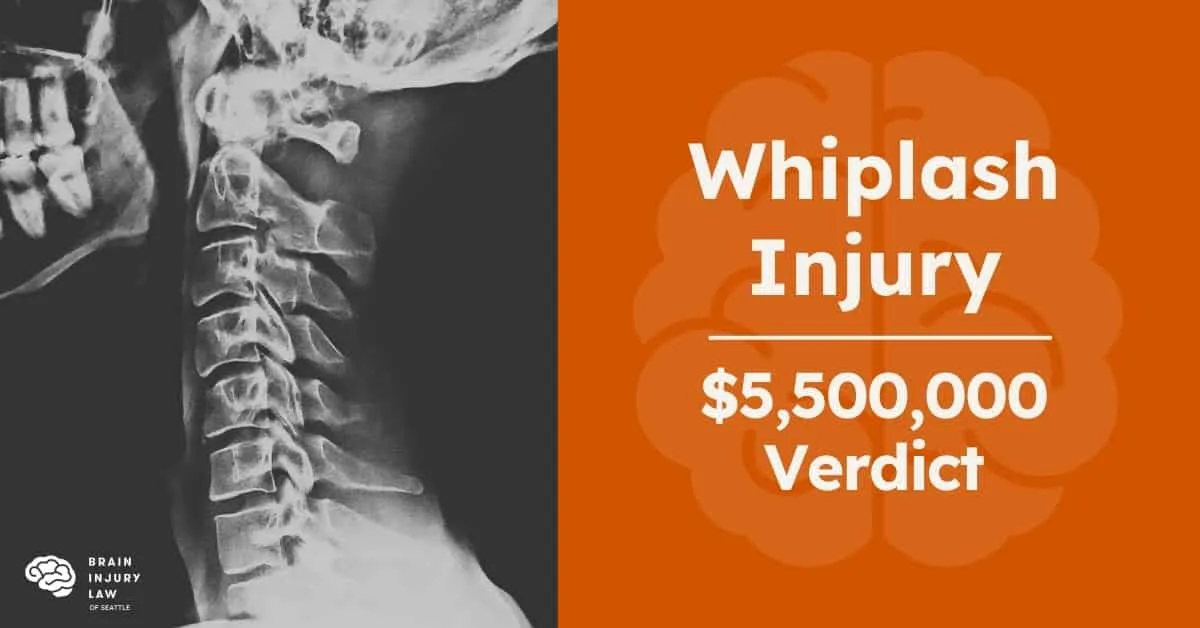
A whiplash-related headache usually has a more specific pattern. It often starts at the back of the head and then travels upward and forward, moving over the top of the head toward the forehead.
This pattern makes sense because the pain is often tied to the neck structures injured in a whiplash event. When the neck is suddenly forced backward and forward, muscles, ligaments, and joints can become irritated, and that irritation can refer pain into the head.
Signs your headache may be coming from the neck
- Pain begins in the base of the skull
- Headache travels from back to front
- Neck pain or stiffness is present
- Turning your head may worsen symptoms
- Shoulder or upper back tightness may occur with the headache
That does not rule out a concussion. It just means the neck is a likely source of at least part of the pain.
How does a concussion headache feel different?
A concussion headache often feels more diffuse, meaning it can affect the entire head rather than following a back-to-front pattern.
It also tends to come with sensitivity. If your headache gets worse when you are around bright lights, loud noise, or when you physically exert yourself, that raises concern for concussion-related symptoms.
Signs your headache may be related to a concussion
- Pain feels like it is throughout the whole head
- Bright lights make the headache worse
- Noise aggravates symptoms
- Physical activity increases the pain
- You feel foggy, dazed, or mentally slowed down
- You have trouble remembering parts of the event
These symptoms deserve prompt medical attention, especially in the hours immediately after the crash.
Can you get a concussion without hitting your head?
Yes. This is one of the most misunderstood parts of rear-end collision injuries.
You do not need to hit your head on the steering wheel, window, or dashboard to suffer a concussion. In a rear-end crash, your body can be propelled forward so violently that your brain moves backward and forward inside your skull.
At impact, the brain may be driven toward the back of the skull. Then, as your body slows because the seatbelt stops your torso, the brain gets thrown forward into the front of the cranium. This back-and-forth movement is often described as a coup-contrecoup injury.
In other words, even without a direct impact to the head, the brain can be injured by this type of rapid motion alone.
A driver sitting still at a stoplight can therefore end up with a genuine brain injury after being rear-ended at just 25 to 30 miles per hour.
Why rear-end crashes can cause more than “just a headache”
The body was not designed to be suddenly accelerated by a moving vehicle. In a moderate rear-end collision, your neck may snap backward into the headrest and then forward in a slingshot motion.
That movement can injure multiple systems at once:
- The neck can sustain whiplash
- The brain can shift inside the skull
- The back and shoulders can absorb force
- The nervous system can become highly irritated
A post-accident headache should never be dismissed based on appearance alone. A vehicle may not look heavily damaged, and the injured person may not have visible wounds, but the force on the body can still be substantial.
When should you get checked out for a headache following a crash?
If you have a headache after a rear-end collision, getting evaluated by an emergency room physician or urgent care physician is the safe move. The earlier you are examined, the better.
This is especially true if your headache is paired with confusion, light sensitivity, memory gaps, dizziness, nausea, neck pain, or any unusual neurological symptom.
Get medical attention right away if you have:
- Severe or worsening headache
- Confusion or disorientation
- Vomiting
- Memory loss
- Loss of consciousness
- Sensitivity to light or sound
- Dizziness or balance problems
- Neck pain with restricted movement
- Symptoms that worsen with activity
If you are unsure, err on the side of being evaluated.
What should you tell the doctor?
Be thorough. One of the biggest mistakes people make is assuming a symptom is too small or too unimportant to mention.
Doctors need a complete picture to distinguish what may be coming from a neck injury and what may be coming from a concussion. If you leave out details, the medical record may not reflect the full extent of what happened.
Tell the doctor about:
- Exactly how the crash happened
- Whether you were stopped or moving
- How fast the impact felt
- When the headache started
- Where the headache is located
- Whether the pain is back-to-front or all over
- Whether light, noise, or exertion makes it worse
- Any neck pain, stiffness, or reduced motion
- Any dizziness, confusion, nausea, or visual symptoms
- Any memory gaps before or after the crash
If you do not understand a question, ask the doctor to repeat or clarify it. Clear answers matter.
Does brief memory loss count as loss of consciousness?
It can be medically significant, yes.
Many people think loss of consciousness only means being completely knocked out and needing to be awakened. That is too narrow. If you have moments after the crash that you cannot recall, that may be important evidence of a concussion.
Even 20 to 30 seconds of missing memory may qualify as a brief loss of consciousness or indicate a brain injury event. Similarly, if there are parts of the period after the crash that you do not remember, that may point to post-traumatic amnesia, which is another important diagnostic clue.
Mention memory issues such as:
- Not remembering the moment of impact
- Missing a short period right after the crash
- Feeling confused about what happened
- Not recalling who spoke to you first
- Gaps in memory while still appearing awake
Do not minimize these details. They matter.
What should you do after you go home?
After you are discharged, you will often be told to take it easy. That is good advice, especially if concussion symptoms are suspected.
Bright lights, screens, noisy environments, and heavy physical activity can aggravate post-traumatic headaches. Resting the brain and avoiding overstimulation may help reduce symptom flares.
Practical steps after discharge
- Reduce screen time
- Avoid bright lights when possible
- Limit exposure to loud environments
- Avoid strenuous physical activity until medically cleared
- Monitor headache intensity and triggers
- Track new symptoms or worsening symptoms
- Follow up if symptoms do not improve
A simple symptom log can help. Write down what you feel each day, what makes symptoms worse, and what seems to be improving.
Common mistakes people make after a rear-end collision
Post-accident headaches are often mishandled in the first 24 to 72 hours. That can delay diagnosis and recovery.
1. Assuming it is only whiplash
A neck injury may be part of the problem, but a concussion may also be present. It is common to have both.
2. Waiting too long to get checked
Some people hope the headache will fade on its own. If it is concussion-related, delaying evaluation can complicate treatment and documentation.
3. Forgetting to mention memory gaps
Short periods of missing memory are easy to dismiss, but they may be one of the strongest clues that a concussion occurred.
4. Leaving out “minor” symptoms
Light sensitivity, noise sensitivity, fogginess, and exertion intolerance are not minor when evaluating a possible brain injury.
5. Returning to screens and stimulation too quickly
Phones, computers, TV, bright environments, and noisy spaces can aggravate symptoms and make recovery harder.
Do concussion symptoms always go away quickly?
No. Some improve within days or weeks, but not all do.
Recent medical literature suggests that only around half of concussions fully resolve, which is why ongoing monitoring matters. If symptoms linger, worsen, or evolve, follow-up care is important.
Pay close attention to what is changing over time. You want to know whether your headache is improving, whether your neck is loosening up, and whether cognitive symptoms are fading or persisting.
FAQ
Is a headache after a rear-end collision normal?
Yes, it is common, but common does not mean minor. A headache can be a sign of whiplash, concussion, or both, so it should be taken seriously.
Where does a whiplash headache usually start?
It often starts in the back of the head near the base of the skull and moves forward over the top of the head toward the forehead.
What does a concussion headache feel like after a car accident?
It often feels more generalized, affecting the whole head. It may also worsen with bright lights, loud noise, or physical exertion.
Can you have a concussion if you never hit your head?
Yes. Rapid back-and-forth movement alone can cause the brain to move inside the skull and produce a concussion.
What should I tell the ER or urgent care doctor?
Tell them every symptom, including headache location, neck pain, light sensitivity, noise sensitivity, dizziness, confusion, and any memory gaps before or after the crash.
Do short memory gaps matter?
Yes. Even a brief period you cannot remember may be an important diagnostic sign of concussion or post-traumatic amnesia.
Should I avoid screens after a concussion?
If screens make your symptoms worse, reducing screen time is a smart step. Many people are advised to avoid bright lights and overstimulating environments during early recovery.
Next steps if you have a headache after a rear-end crash
If you only do three things, do these:
- Get evaluated promptly by an ER or urgent care physician
- Report every symptom clearly, including memory problems and light or noise sensitivity
- Track your recovery daily so you can spot improvement or warning signs
A headache after a rear-end collision may be straightforward, but it may also signal a concussion that should not be ignored. The safest approach is to treat it seriously from the start, get examined, and pay close attention to how your symptoms evolve over time.
Conclusion
A rear-end collision headache is not something I would ever advise ignoring. The pattern of the pain can offer useful clues: a back-of-head, forward-moving headache may point more toward whiplash, while a whole-head headache worsened by light, noise, or exertion may suggest concussion.
The most important move is early evaluation and complete symptom reporting. When you tell the doctor exactly what happened, exactly what you felt, and exactly what you cannot remember, you give yourself the best chance of getting the right diagnosis and the right care.